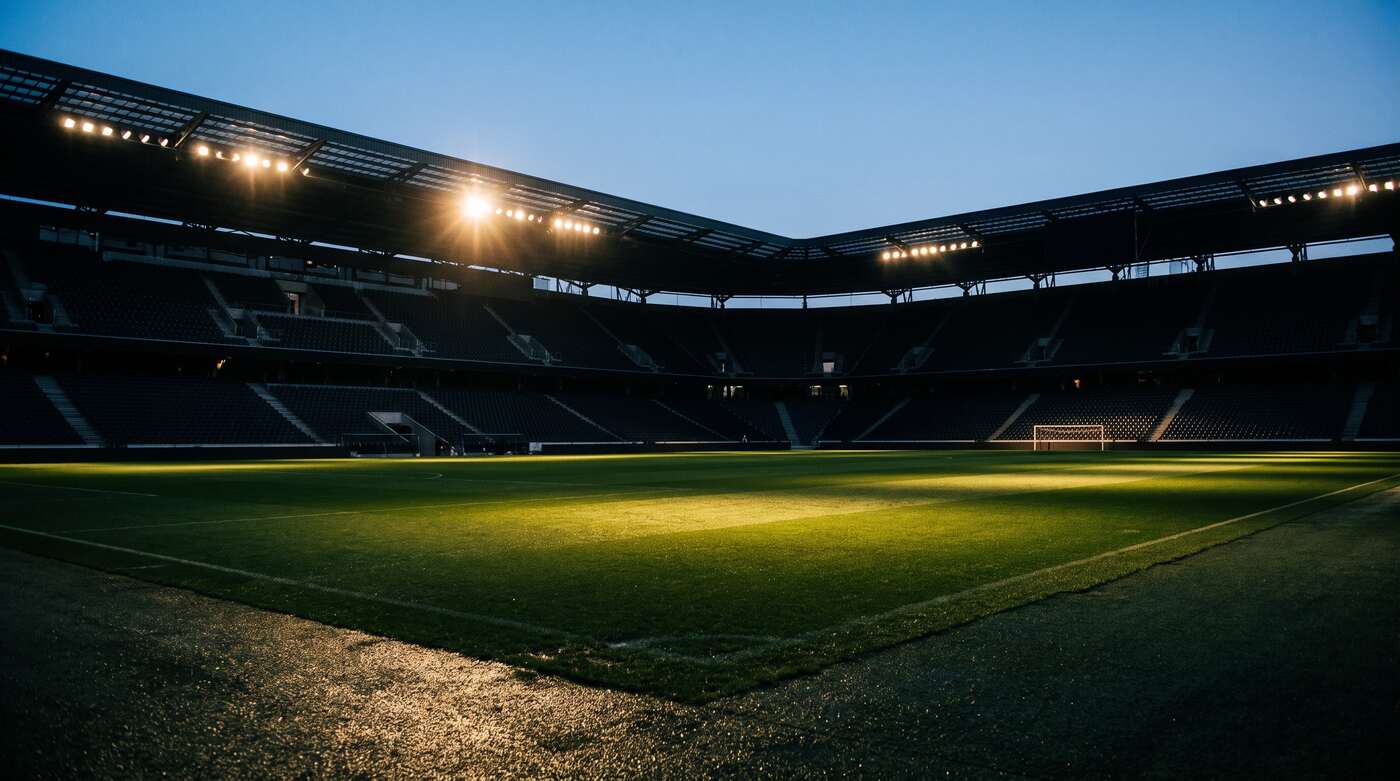
Already in use. On the most sensitive patch of grass in Germany.
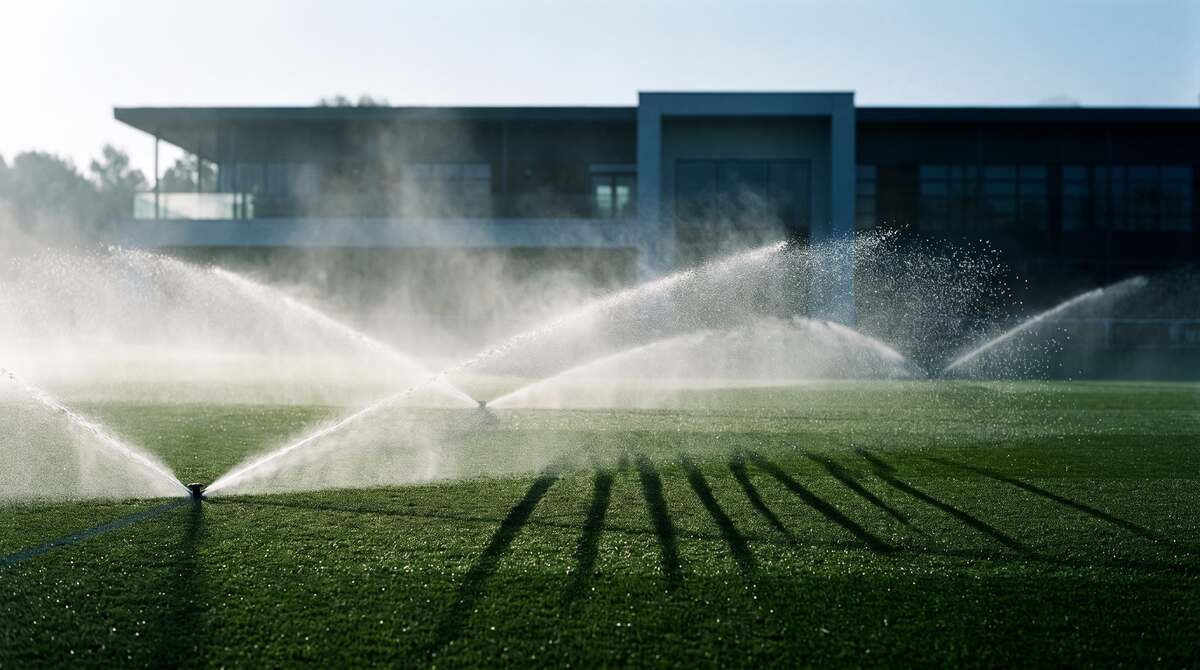
Our sister company TurfCoach measures pitch quality with exactly the method we now apply to the whole stadium. Measure, model, derive the right decision. In every Bundesliga stadium, for years, during live match operations.
What has proven itself on the pitch, we apply to heating, cooling, lighting and power.
Every stadium in the Bundesliga.

“We have been working in your stadiums for years.”
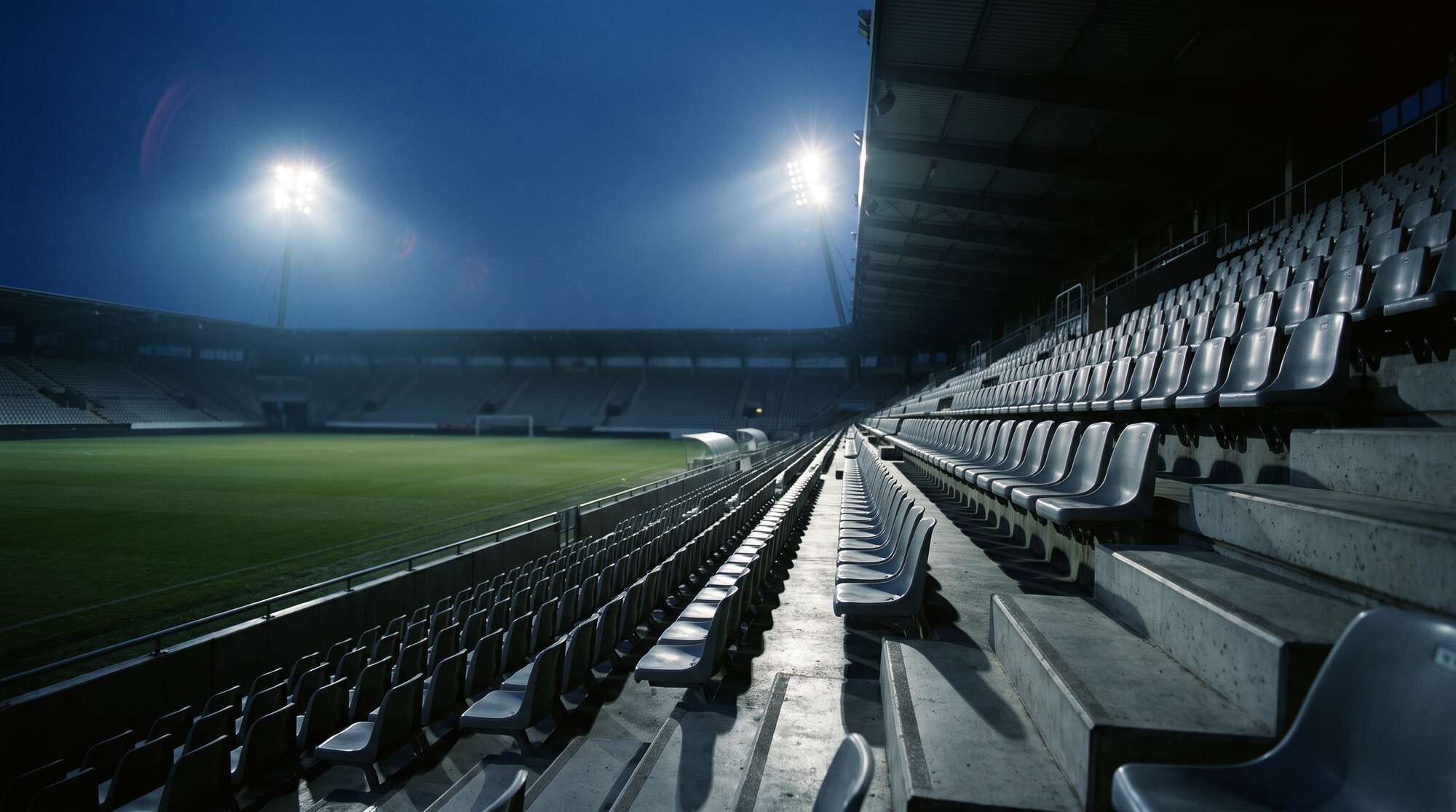
MATCHDAY
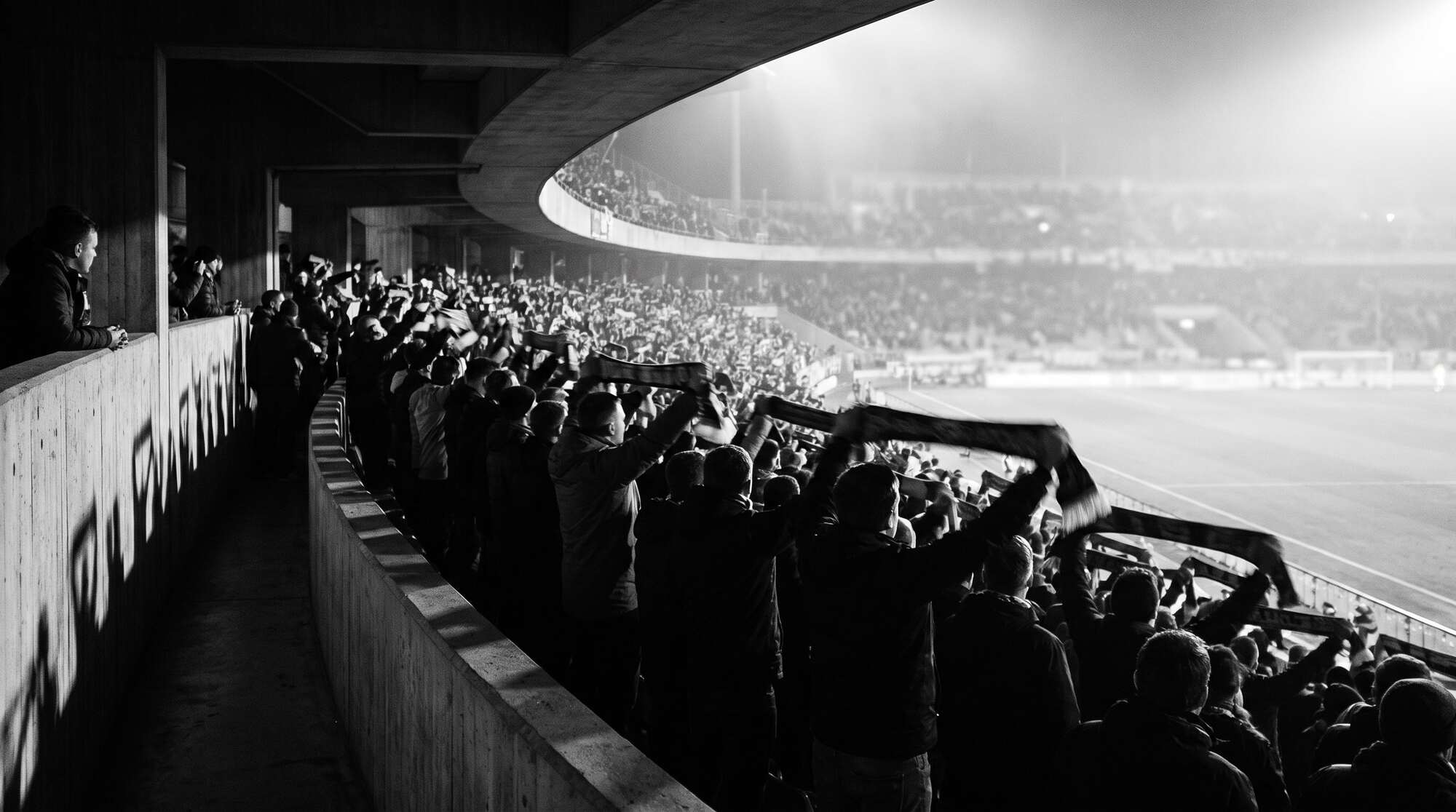
Matchday is sacred.
No intervention on a matchday. No construction site during the season. Installations wait for the summer break.
An analytics layer above your systems. Nothing else changes.
Today your building management system runs each trade on its own, on fixed values set at commissioning. Five trades, five contracts, five maintenance firms, and nobody sees the whole. We add a layer on top that understands your stadium as one system. It learns from fixture list, weather, occupancy and electricity price and gives every system its schedule. Your equipment carries it out.
Your equipment stays.
We connect what is already there. Nothing gets replaced.
Every system stays autonomous.
If our analytics go down, your stadium keeps running as it does today. No single point of failure.
We think in matchdays.
Schedules follow the fixture list, installations wait for the summer break. Matchday is sacred.
Measure first, invest second.
Storage, solar, charging points or new heating go only where your data proves the business case. You are not buying a vision. You are buying certainty.
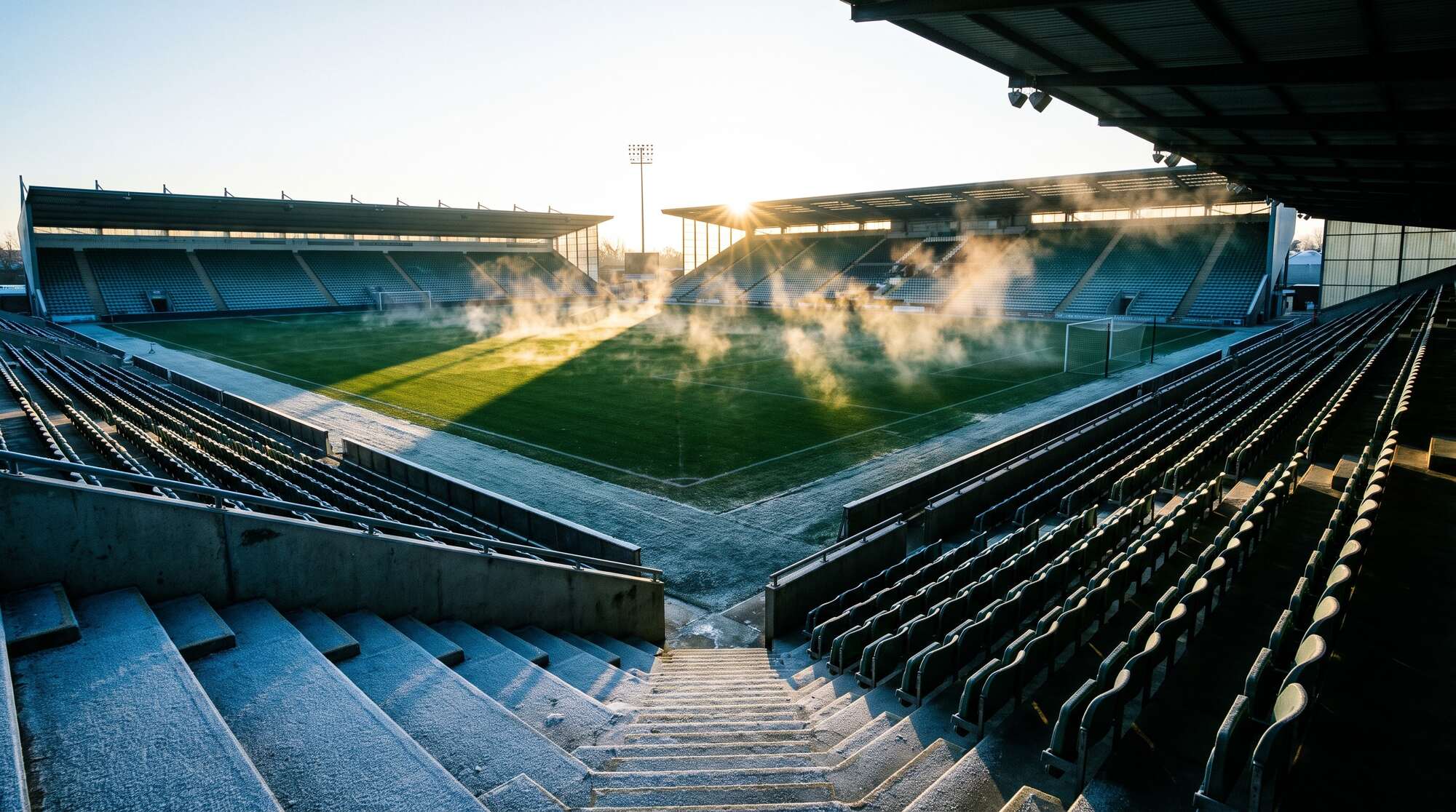
WINTER MATCHDAY
The most expensive evening of the year is a winter matchday under floodlights.
Floodlights, pitch heating, ventilation and catering all run at once. A single peak that costs for the whole year.
Consume less.
Supply yourself.
Buy smarter.
Prove it audit-proof.
Consume less.
Schedules for heating, lighting and ventilation that follow the fixture list instead of the clock. We promise no number. We measure yours.
Supply yourself.
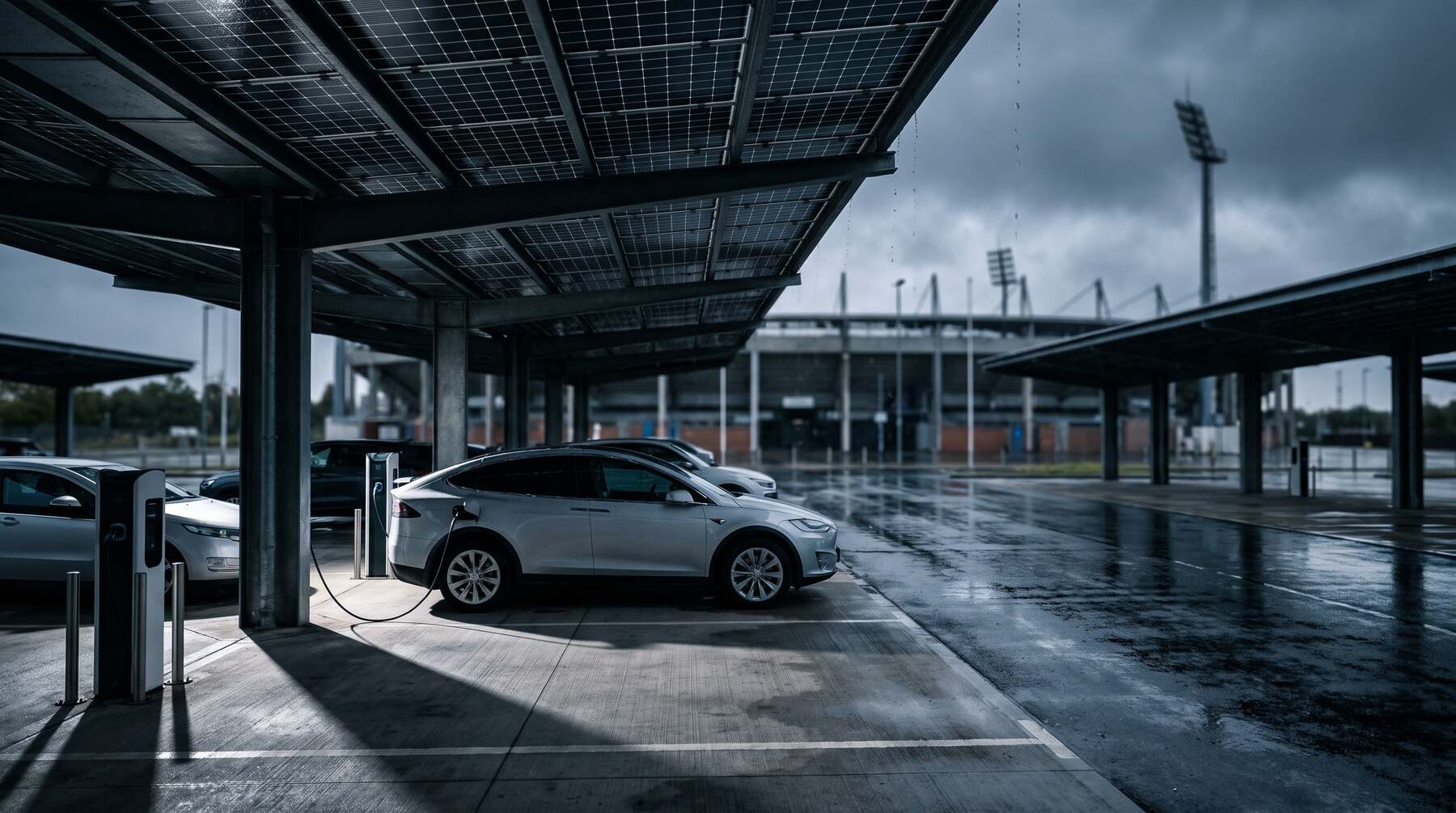
The stadium roof and the covered parking bays deliver at noon, the chargers beneath them draw on matchday, the pitch heating at night in winter. The panels above the car park keep heat and rain off the cars while they charge. A battery moves your own power to where it is needed right now, and the analytics decide every hour whether charging, storing or feeding in is worth more.
Buy smarter.
A single uncapped peak sets your demand charge for the whole year. A battery that shaves that peak works on 365 days, not just 17.
Prove it audit-proof.
Plus CSRD and the ESG reporting your sponsors ask for. The analytics produce this data as a by-product. What costs weeks of legwork today is already in the system.
The experience of your operations team gets documented for the first time. It stays in the house, even when people retire.
One morning. Then you know what is possible.
We come by, look at your load profile, roof areas, grid connection and plant, and four weeks later we tell you what potential your stadium has, which measures pay off and how they can be financed. No obligation, no charge.
- ONE MORNINGAssessment
On site. Load profile, roof areas, grid connection, plant.
- FOUR WEEKSEvaluation
Potential, measures, financing. You decide.
- RUNNING SEASONConnection
During operations. No construction site, first quick wins.
- SUMMER BREAKInstallations
Only where the data proves the business case.
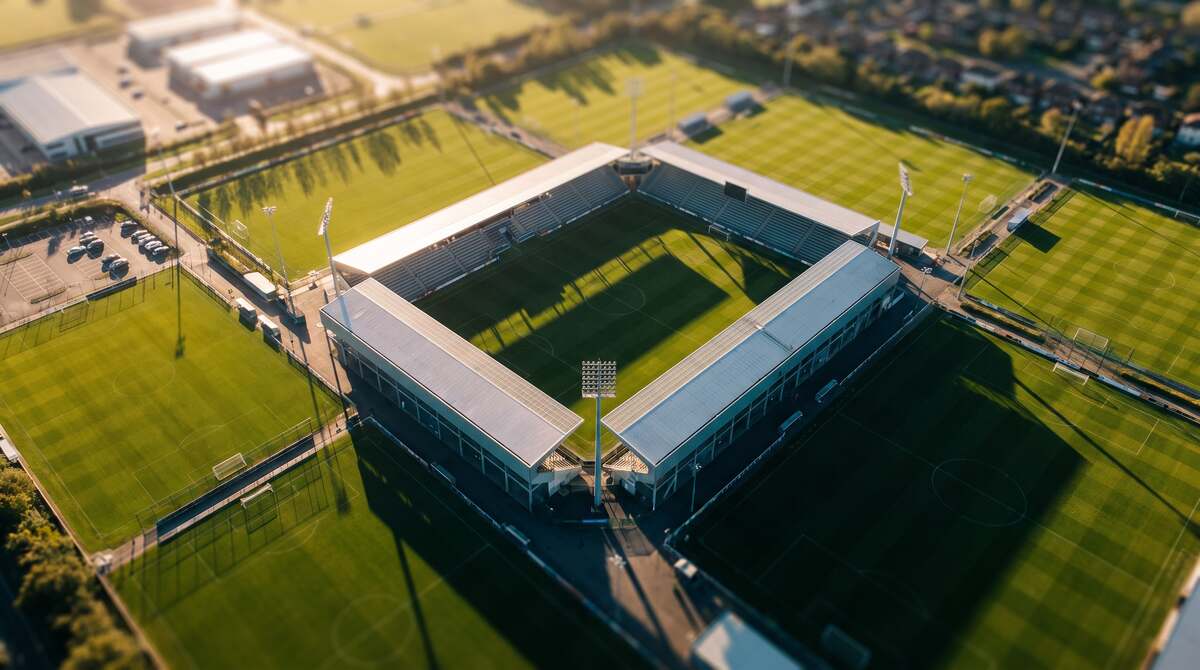
If you prefer a cautious start, begin at the training centre. It runs every day, and matchday stays untouched.
Christian TheilFounder, club access, TurfCoach Kristina JahnProject management and structuring
 Philipp BouteillerEnergy infrastructure and financing
01How it is financed
Two routes, both reach the goal. Which one fits is decided after the assessment.
The club invests itself. Full control over equipment and operation, the entire saving stays with the club, the assets sit on the balance sheet. Fits when capital is available and you want to hold the assets.
Contracting. No capex for the club, InfraField or a financing partner invests, a predictable fee is paid out of the saving. Fits when the budget is tight and the effect should still come now.
02What your facilities manager will ask
Where do the analytics run? In the cloud. Models, forecasts and optimisation compute schedules and setpoints there. Control stays local, in your existing plant and BMS, connected via BACnet, Modbus or OPC UA. Safety circuits, fire protection and existing maintenance contracts stay untouched.
What happens if the connection drops? Every trade automatically continues on its local control, as before our connection. No intervention, no on-call duty. On matchday operations take priority, in defined windows we only monitor, never optimise.
Who owns the data? You do. All operating data remains the property of the club and can be exported at any time, also after the contract ends. We see plant and energy data and occupancy at aggregate level. No personal spectator or player data.
Who has their hand on the switch? Your team. Every schedule is visible and can be overridden locally. We monitor models and data streams, not your staff.
03The numbers behind it
16 to 18 euros of energy cost per seat and year, around 12 euros before the energy crisis. Stadionwelt, Special Smart Stadium, 2022.
117 DFL sustainability criteria, externally audited by DEKRA since 2025/26. DFL, Annex XIV Licensing Regulations.
The DFL recommends its clubs save 15 to 20 percent of energy. dfb.de.
An efficiency analysis at the Allianz Arena found 5 percent on roughly 19 million kilowatt hours a year. detail.de.
A winter matchday with floodlights and pitch heating draws up to 150,000 kilowatt hours. stadionwelt.de.
81 percent of facility management providers name the skills shortage as their biggest problem. PwC FM Monitor 2025.
Over 5 MWp of solar on the roof at Borussia Dortmund, with battery storage since late 2025. pv-magazine.de.
INFRAFIELD
We build the infrastructure that top-level sport runs on.